Listen, I know what you’re thinking. Homemade pretzel buns? That sounds like something only a bakery technician can pull off, right? Wrong! I used to think the same way. My first attempt resulted in dense, salty hockey pucks that were definitely *not* soft or chewy. But I stuck with it, and now I’m here to tell you the secret to getting that incredible golden crust paired with an interior so fluffy it practically melts.
This recipe is my absolute go-to because it nails the texture every single time. We’re talking about a bun that’s substantial enough for a massive burger but tender enough to eat plain with a smear of butter. The trick isn’t complicated; it’s just about respecting the dough and not being scared of that boiling bath. If I, the queen of accidentally burning toast, can master these soft pretzel buns, trust me, you can too. They are game-changers for weeknight dinners! 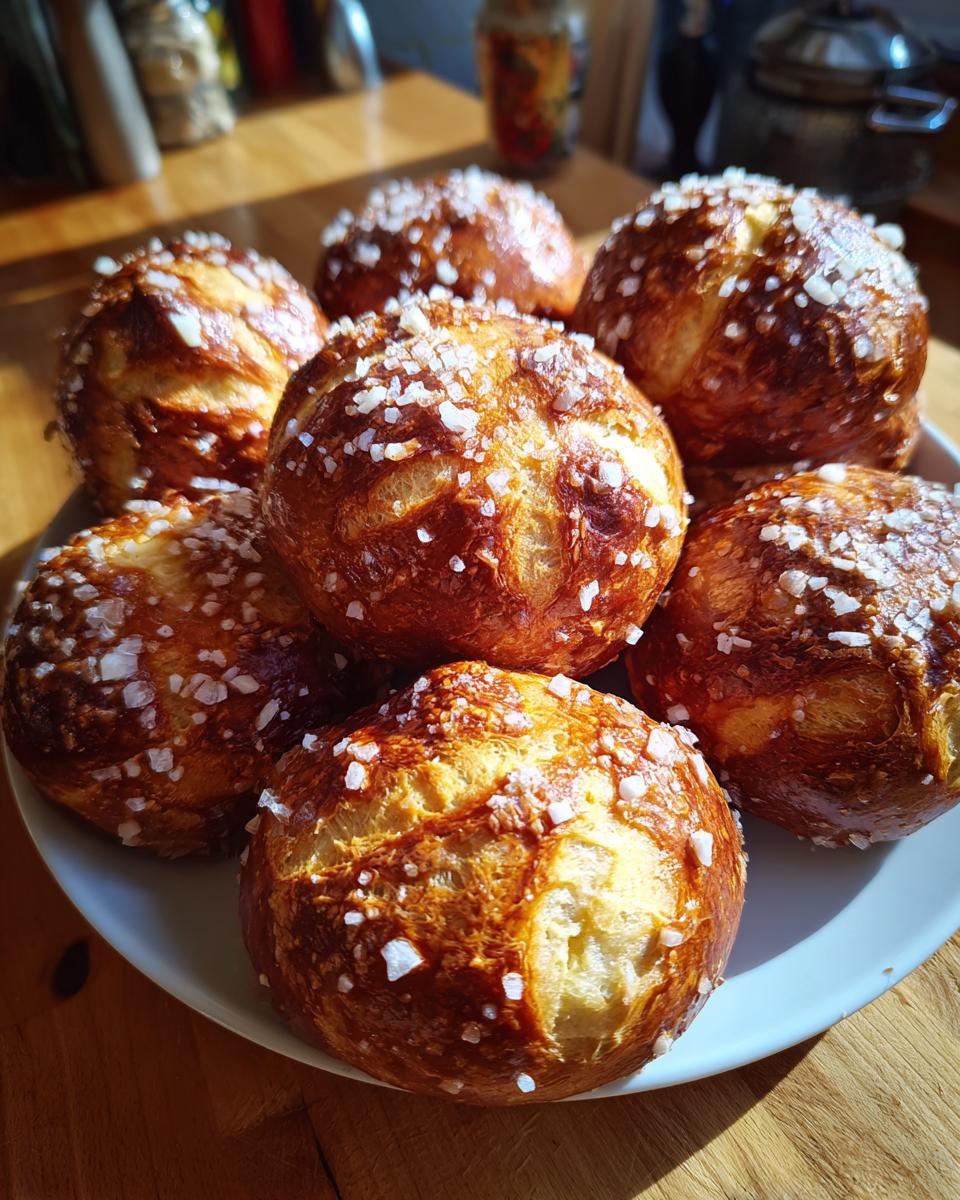
Gather Your Ingredients for Perfect Pretzel Buns
Getting these amazing homemade pretzel buns right starts with having everything ready to go. Don’t try to rush the water temperature or skip measuring the baking soda—that’s where the magic happens! I always lay everything out on the counter before I even think about waking up the yeast. It just makes the whole process flow smoothly, which is key when you’re working with yeast dough.
We only get 8 beautiful buns from this batch, so let’s make sure we have the right building blocks for that signature pretzel flavor and texture.
Dry Ingredients for Your Pretzel Buns
You’ll need about three and a half cups of all-purpose flour. Make sure you spoon it into your measuring cup and level it off, don’t just scoop! That prevents a dense, heavy bun. Grab your active dry yeast—just one packet’s worth—and a teaspoon of sugar to feed it. And don’t forget the salt for flavor!
Wet Components and the Boiling Bath
The water for the yeast needs to be warm, about 110 degrees Fahrenheit, so it feels comfortably warm but not hot to the touch. You’ll also need some melted butter that has cooled down a bit so it doesn’t kill the yeast. The real star for the crust, though, is the boiling bath: you’ll need six cups of water mixed with half a cup of baking soda. Yes, half a cup! That’s what creates that deep, dark, glossy crust on your finished pretzel buns.
Equipment Needed to Shape and Bake Pretzel Buns
You don’t need a ton of fancy gear to make these incredible pretzel buns, but a few specific tools really help things along, especially in the shaping stage. If you have a stand mixer, use it! It makes kneading so much easier, saving your arms for taste-testing later. You’ll definitely need a large mixing bowl for the first rise, and a large, deep pot for that crucial boiling step.
A slotted spoon or spider strainer is essential for safely lifting the buns out of the boiling soda water. And for getting that perfect look on top of your pretzel buns, a very sharp knife or a razor blade is necessary for scoring the dough just before they go into the oven. Trust me, cutting them *after* the bath is the way to go!
Step-by-Step Instructions: How to Prepare Pretzel Buns
Okay, deep breath! This is where we turn simple ingredients into those amazing, chewy pretzel buns you dream about. It looks like a lot of steps, but honestly, the hands-on time is pretty quick. The yeast does most of the heavy lifting for us. Just follow these steps, and you’ll be pulling bakery-style buns out of your oven before you know it.
Activating Yeast and Mixing the Pretzel Bun Dough
First things first, we need to wake up that yeast! Get your warm water ready—it needs to be between 105 and 115 degrees Fahrenheit. If it’s too hot, you’ll kill the yeast; too cold, and it won’t wake up. Stir in the sugar and sprinkle the yeast on top. Go make a cup of coffee or scroll through Instagram for about ten minutes. When you come back, it should look foamy and bubbly—that means the yeast is happy and working! While that sits, mix your flour and salt together in your big bowl. Once the yeast is foamy, pour it into the flour mixture along with your slightly cooled melted butter. Mix it low and slow until a shaggy dough forms. Don’t panic about the mess yet!
The First Rise and Shaping Your Dough Balls
Now we knead! If you have a stand mixer, let it go for about seven minutes on low speed until the dough is smooth and elastic. If you’re doing this by hand, get ready for a nice arm workout—about ten minutes of folding, pushing, and turning until it feels smooth. Lightly oil a clean bowl, toss the dough in there, turn it over so it gets coated, and cover it up tightly. Find a warm spot—maybe your turned-off oven with the light on—and let it double in size. This whole rising process takes about an hour, so use that time to clean up! Once it’s doubled, gently punch the air out. Divide that beautiful dough into 8 equal pieces. I shape mine by tucking the edges underneath and rolling them under my palm until I have a really tight, smooth ball. Place those 8 balls on a baking sheet lined with parchment, cover them again, and let them rest for a quick 20 minutes while you get the oven screaming hot to 425 degrees Fahrenheit.
The Alkaline Bath and Scoring Your Pretzel Buns
This is the step that makes these pretzel buns taste like they came from a fancy German bakery! Bring your six cups of water up to a rolling boil, and then (carefully!) stir in that half-cup of baking soda. It’s going to foam up like crazy, so use a big pot! Working two at a time, gently drop your dough balls into the boiling bath. They only need 30 seconds on each side. Use a slotted spoon to lift them out—they’ll be puffy and slightly cooked. Place them back on the parchment paper. Immediately grab your sharp knife and slice a shallow ‘X’ across the top of each bun. This lets them expand nicely. Now, sprinkle them heavily with coarse sea salt. Don’t be shy here! 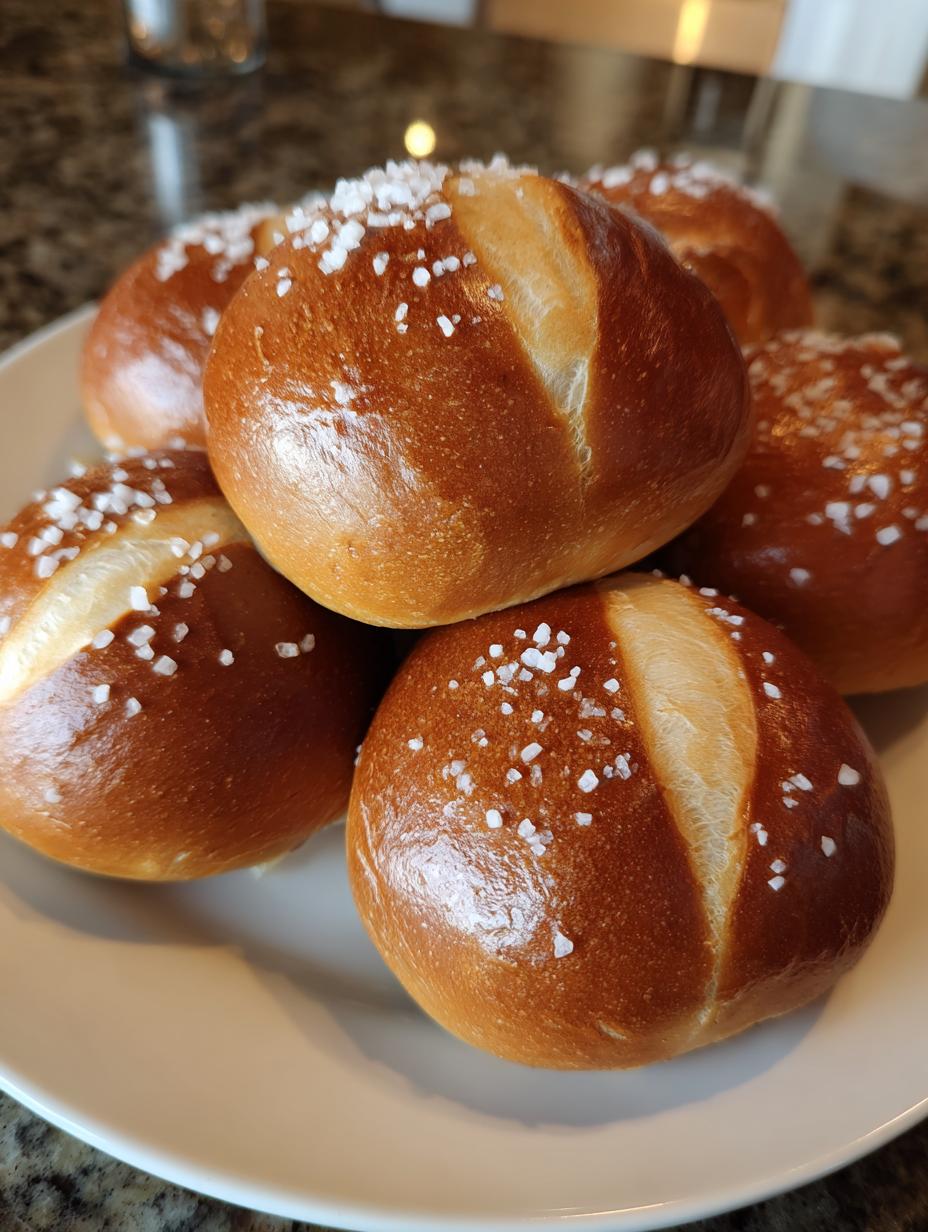
Baking to Achieve That Golden Pretzel Crust
Get those salted beauties into the 425°F oven right away. They don’t need long at all! Bake them for about 20 to 22 minutes. You are looking for a deep, rich, mahogany-brown color—that’s the sign of a perfect pretzel crust. If they look pale when you think they are done, just give them 2 or 3 more minutes. When they come out, they’ll smell incredible! Let these fantastic pretzel buns cool on a wire rack for just a few minutes before you slice them open. They are amazing warm!
Tips for Perfect Pretzel Buns Every Time
I’ve made enough batches of these pretzel buns to know exactly where things can go sideways, but don’t worry, they are always salvageable! The biggest make-or-break moment is definitely that baking soda bath. If your water isn’t boiling hard enough, the dough won’t set fast enough, and you end up with a pale, floppy bun instead of that signature dark crust. Remember, the hotter the better for that 30-second dip!
If your pretzel buns are coming out too tough or dense, you probably overworked the dough during kneading, or maybe you didn’t let the yeast proof long enough initially. Yeast needs time to build those air pockets! Another common issue is the salt; if you use standard table salt, it dissolves too fast. Always opt for coarse sea salt or pretzel salt so you get those satisfying little bursts of flavor on the crust of your homemade pretzel buns.
If you want an even deeper color, you can try adding a tiny splash of barley malt syrup to your boiling bath along with the baking soda. It’s an old trick that really enhances the browning process without changing the flavor too much. Stick with these tips, and your next batch of pretzel buns will look professionally made! You can see more of our baking adventures on our Pinterest page.
Storing and Reheating Your Delicious Pretzel Buns
These soft pretzel buns are honestly best eaten the day you make them, fresh and warm, but they travel well! Because of that wonderful, chewy crust, they can dry out if left sitting on the counter too long. If you have leftovers, don’t just toss them in a plastic bag uncovered, or they’ll become rock hard by morning. For short-term storage, wrap them tightly in plastic wrap before placing them in an airtight container.
If you need them to last longer than a day, the freezer is your best friend. They freeze beautifully! When you’re ready to enjoy them again, the reheating process is super simple and brings back that fresh-baked texture. A quick trip under the broiler or a few minutes in a moderate oven works wonders to refresh that crust for your next sandwich.
Storage Table for Pretzel Buns
Here’s a quick guide on how long you can safely keep your homemade pretzel buns around:
| Storage Location | Duration | Reheating Tip |
|---|---|---|
| Countertop (Airtight) | 1 to 2 days | Lightly mist with water and warm in the oven at 350°F for 5 minutes. |
| Refrigerator | Up to 5 days | Not recommended unless absolutely necessary, as they dry out faster. |
| Freezer | Up to 3 months | Wrap tightly first, then thaw slightly and warm in the oven. |
Frequently Asked Questions About Pretzel Buns
I get so many questions about these pretzel buns because everyone wants that perfect bakery look! It’s usually down to one tiny detail, so let’s clear up the most common worries I hear from folks trying this recipe for the first time. Don’t stress if your first batch isn’t perfect; that’s how we learn!
The biggest game-changer for getting amazing homemade pretzel buns is making sure you don’t rush the rise or skip the boiling step. That alkaline bath is non-negotiable for that classic flavor and color! If you want to see more of our baking tips, check out our Medium page.
Can I Substitute the Flour When Making Pretzel Buns?
You absolutely can experiment, but I strongly suggest sticking to all-purpose flour for your first try. Bread flour will work if you want a chewier texture, but you might need a tiny bit more water because bread flour absorbs more liquid. I wouldn’t recommend whole wheat for this recipe unless you really love a rustic texture, as it tends to block that beautiful soft interior we are aiming for in these pretzel buns.
Why Do My Pretzel Buns Not Turn Brown Enough?
This is almost always about the boiling bath! If your pretzel buns are pale or look yellowish instead of that gorgeous deep brown, your water wasn’t hot enough, or you didn’t use enough baking soda. Make sure that water is at a rolling boil before you drop them in, and don’t skimp on the half-cup of baking soda. Also, double-check your oven temperature; if it’s running cool, they won’t develop that deep color in the required 20 minutes.
Understanding the Nutrition of Your Homemade Pretzel Buns
Now that you know how to create these incredible soft pretzel buns, I know some of you are wondering what exactly is going into those delicious things! Baking from scratch means you control everything, which is fantastic, but it’s still good to have a general idea of the payoff. Remember, since we are using real butter and making these fresh, these numbers are just an estimate, but they should give you a good baseline for enjoying them responsibly! If you are looking for other bread recipes, check out our guide on 18 Best Bread Recipes.
They are surprisingly satisfying for a sandwich roll, packing a good dose of protein, but they are also a treat, so enjoy them with your favorite toppings!
Nutritional Estimate Table
| Nutrient | Amount (Per Bun) |
|---|---|
| Calories | 220 |
| Total Fat | 6g |
| Carbohydrates | 35g |
| Protein | 6g |
Share Your Homemade Pretzel Buns Experience
I really hope you loved making these soft pretzel buns as much as I love eating them! Seriously, if you tried this recipe, please come back and tell me how they turned out. Drop a rating below, and let me know what you used them for—a juicy burger, maybe? I can’t wait to hear about your success! Feel free to connect with us on Facebook.
Print
Master 8 amazing pretzel buns this time
- Total Time: 2 hours 2 minutes
- Yield: 8 buns
- Diet: Omnivore
Description
Make soft, chewy pretzel buns with a golden crust and fluffy inside. Perfect for sandwiches, burgers, or snacking—easy to make at home.
Ingredients
- 1 1/4 cups warm water (about 110°F)
- 2 1/4 teaspoons active dry yeast
- 1 teaspoon granulated sugar
- 1/4 cup unsalted butter, melted and cooled
- 3 1/2 cups all-purpose flour, spooned and leveled
- 2 teaspoons salt
- 1/2 tablespoon vegetable oil (for greasing bowl)
- 6 cups water (for boiling)
- 1/2 cup baking soda
- Coarse sea salt for topping
Instructions
- Combine warm water, yeast, and sugar in a measuring cup. Stir gently and let sit for 10 minutes until foamy.
- In a large bowl or stand mixer, combine flour and salt. Add the yeast mixture and melted butter.
- Mix on low speed or by hand until a dough forms. Knead for 6–7 minutes until smooth and elastic.
- Lightly oil a clean bowl and place the dough inside, turning to coat. Cover with plastic wrap and a towel. Let rise in a warm spot for 1 hour or until doubled in size.
- Punch down the dough and divide it into 8 equal pieces. Shape each into a smooth ball by tucking edges underneath and rolling under your palm until tight.
- Place the dough balls on a parchment-lined baking sheet. Cover and let rest for 20 minutes while preheating oven to 425°F.
- Bring 6 cups of water and baking soda to a boil in a large pot. Gently drop 2 buns at a time into the boiling water and cook for 30 seconds per side. Remove with a slotted spoon and return to the baking sheet.
- Use a sharp knife to score an “X” on top of each bun. Sprinkle generously with coarse salt.
- Bake for 20–22 minutes until deep golden brown. Let cool slightly before serving.
Notes
- The rising time is not included in the Prep Time.
- The total time includes 1 hour 20 minutes for rising.
- Prep Time: 20 minutes
- Cook Time: 22 minutes
- Category: Bread
- Method: Baking
- Cuisine: American