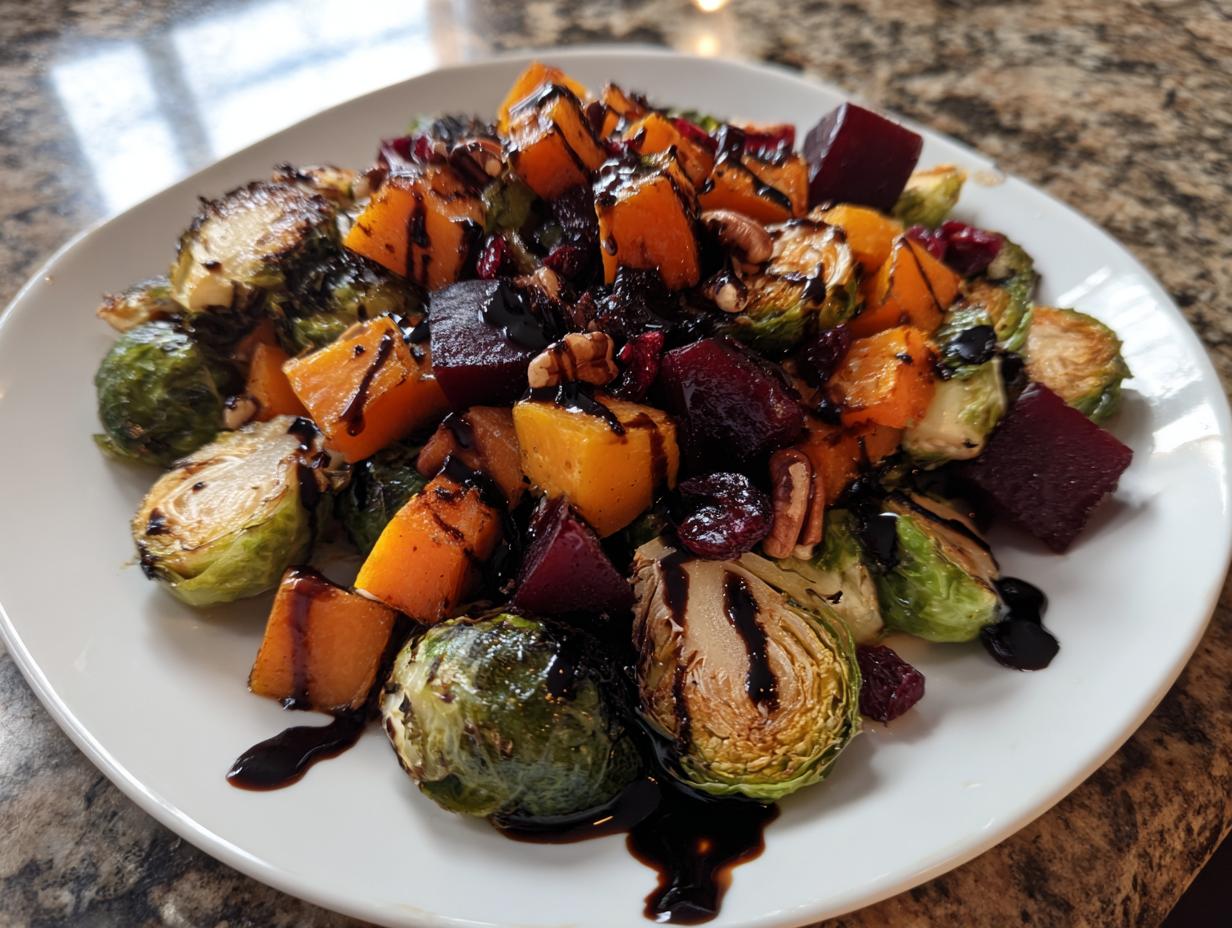
Winter Vegetable Salad recipes always sound intimidating, right? Like something you’d only see on a fancy magazine cover, not something a beginner like me, Adam, would try. When I first started NoobRecipes, I thought salads needed lettuce and maybe some croutons. Boring! But then the weather turned cold, and I realized I needed something hearty that didn’t involve turning on the stove for an hour.
This particular Winter Vegetable Salad changed everything for me. It uses roasting, which sounds fancy, but honestly, it’s just putting vegetables in a hot box until they taste amazing. That’s the secret I want to share with you today—mastering simple techniques like roasting builds real cooking confidence (that’s the EEAT part!). We’re taking humble Brussels sprouts, squash, and beets and turning them into this stunning, colorful dish. Trust me, if you can cube a squash, you can absolutely nail this recipe. We’re proving that healthy and delicious doesn’t mean complicated around here!
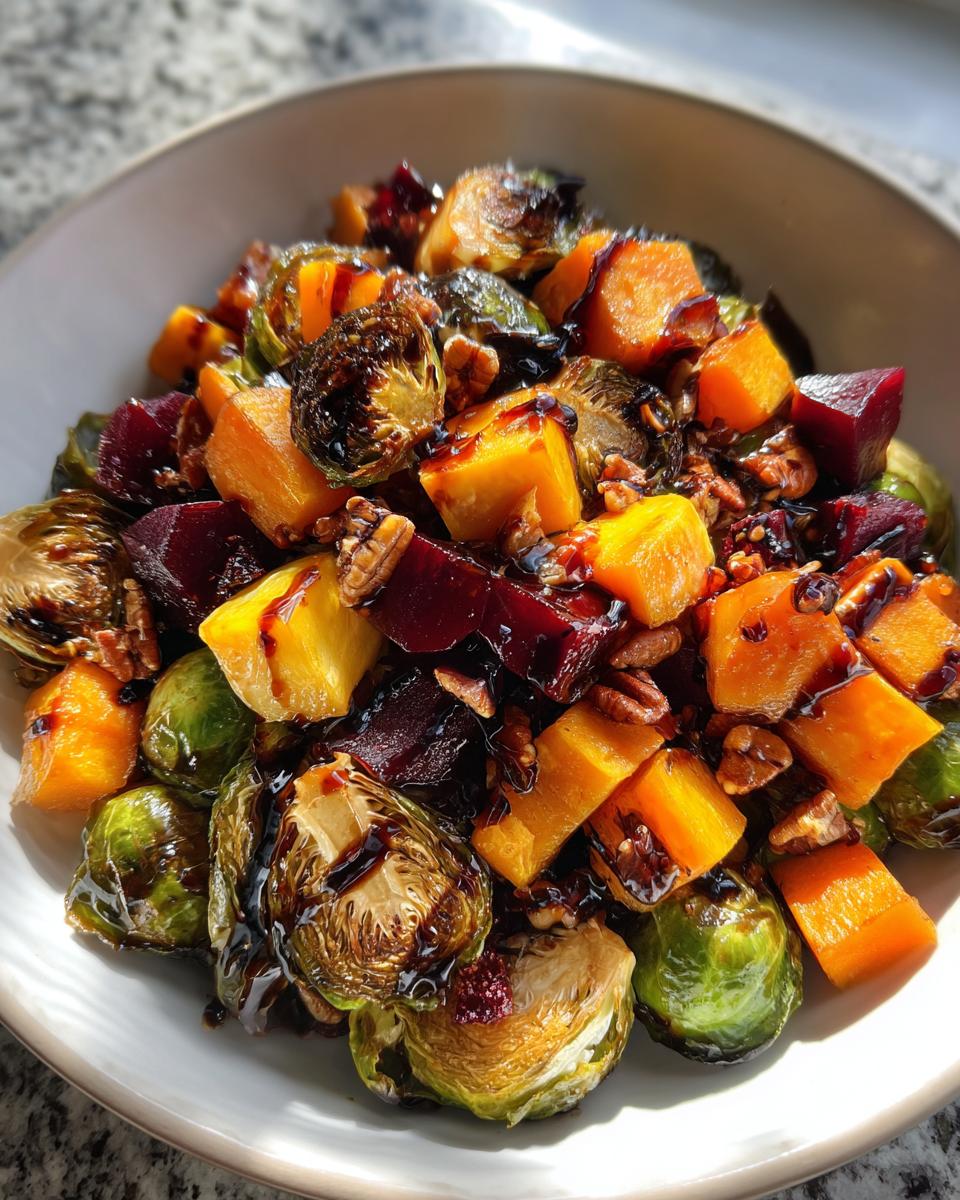
Essential Components for Your Winter Vegetable Salad
Okay, let’s talk ingredients. This Winter Vegetable Salad relies on textures and deep, earthy flavors, so we need good quality stuff. Don’t panic about the list; we are going to prep most of it ahead of time, which is totally manageable for a beginner cook.
The whole magic of this salad comes from how we treat the core components. You’ll need Brussels sprouts and butternut squash for the roasting part, and pecans for that essential crunch. Then we balance it out with the sweetness of cranberries and the earthy flavor of the beets.
Roasted Vegetables and Nuts
For the sprouts and squash, you need to trim them up and cut them into bite-sized pieces—halves for the sprouts, 1-inch cubes for the squash. We use olive oil and salt, and they go into a hot oven until they get those lovely brown, charred edges. That char is flavor, folks! The pecans just need a quick toast in the oven; watch them like a hawk because they go from perfect to burnt in about thirty seconds flat.
The Sweet and Tart Additions
You want dried cranberries—no need to rehydrate those, they add chewiness. For the beets, you must cook them until they are tender, let them cool down completely, and then dice them small. I stress cooling them first, otherwise, you end up with a pink mess instead of distinct cubes in your salad.
Crafting the Simple Balsamic Glaze
This glaze is what ties everything together, and it’s ridiculously easy. We take a full cup of balsamic vinegar and sweeten it up with about a quarter cup of honey or brown sugar. We just let it simmer down until it thickens up nicely. That’s it—no fancy emulsifiers needed! If you want to see more simple sauce ideas, check out our recipe for classic meatloaf glaze with brown sugar.
Step-by-Step Guide to Making the Winter Vegetable Salad
Alright, this is where we roll up our sleeves and prove how easy this dish is. We’re going to handle the roasting first because that takes the longest, but you can multitask while the oven is working hard for us. Remember, we’re building layers of flavor here, so don’t rush the roasting process!
Roasting the Winter Vegetables
First things first: get that oven preheated to 375 degrees F and get your veggies ready. Toss those halved Brussels sprouts with some oil and salt, cut-side down, onto a lined sheet. Do the exact same thing with your cubed butternut squash on a separate sheet—it needs space to breathe and brown properly. Pop them both in. The sprouts need about 20 to 25 minutes, and you should flip them halfway through. The squash takes a similar time until it’s soft and getting those sweet caramelized edges. They should look tender and slightly charred when they come out. That char is flavor, my friends!
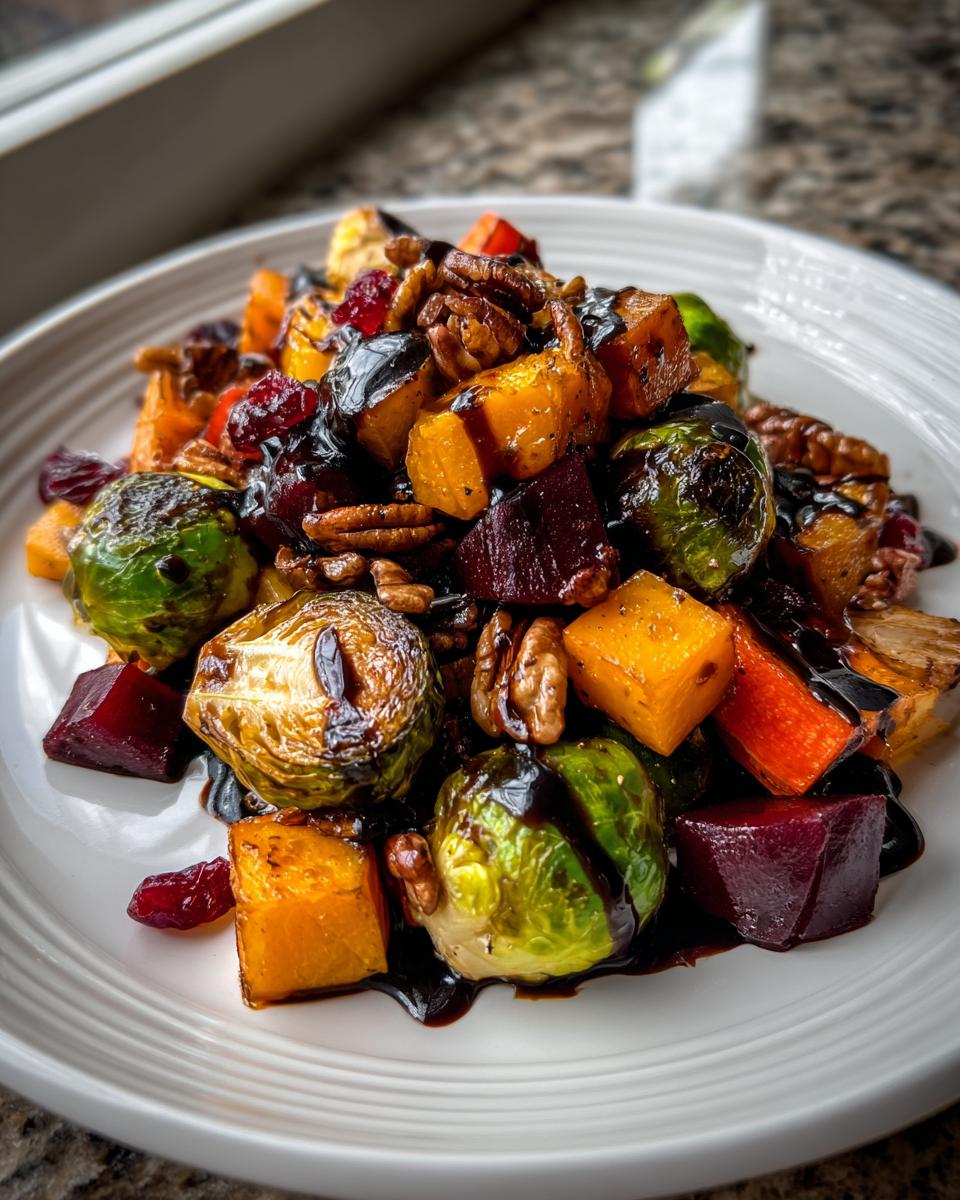
Preparing the Beets and Toasting Pecans
While the vegetables are roasting, let’s deal with the beets. Put them whole in a pot of water, bring it to a boil, and let them simmer, half-covered, for about 30 to 40 minutes. They are done when a fork slides in easily. Drain them, run them under cold water—or just wait until they are cool enough to handle—peel off that skin (it slides right off!), and dice them small. Now, turn the oven down slightly to 350 F for the pecans. Spread those pecans out and toast them for just 5 to 10 minutes. Seriously, watch them like a hawk; they burn so easily, and nobody wants bitter nuts in their beautiful Winter Vegetable Salad.
Finishing the Balsamic Glaze
This glaze is what makes this salad pop! Pour your balsamic vinegar and your honey or brown sugar into a small saucepan. Put it over medium heat and just stir it often. You need to let it reduce down until it coats the back of a spoon nicely. If you dip a spoon in and run your finger across the back, and the line stays put, you’re done! If it’s still runny, give it another minute or two. Take it off the heat.
Assembling Your Perfect Winter Vegetable Salad
Time to bring this masterpiece together! Grab your big mixing bowl. Gently toss the roasted Brussels sprouts, the roasted squash, the crunchy toasted pecans, and the dried cranberries. Now, here is the crucial step for the best-looking Winter Vegetable Salad: add the diced beets last. If you mix them too early, that deep red color will bleed everywhere and turn your beautiful orange and green salad a muddy brown. Once everything else is combined, gently fold in the beets. Drizzle that gorgeous balsamic glaze right over the top just before serving—don’t mix the glaze in; let people get a hit of that sweet tang with every bite!
Tips for an Expert-Level Winter Vegetable Salad
You’ve nailed the basics, which is huge! But if you want to take this Winter Vegetable Salad from ‘great’ to ‘I need that recipe immediately’ status, here are a few little tricks I picked up while testing batches for NoobRecipes. If you want to see more tips on building flavor, check out our guide on garlic confit butter.
First, when roasting your vegetables, make sure they aren’t crowded on the pan. I know it’s tempting to pile everything in, but if they overlap, they steam instead of roast. And steaming means no crispy edges—we absolutely need those crispy, caramelized edges on the squash and sprouts for texture!
Second, about that balsamic glaze: if you want a brighter salad presentation, use white balsamic vinegar instead of the dark stuff. It reduces down beautifully, and you get that incredible sweet tang without staining your beautiful roasted vegetables red or brown. It keeps the colors vibrant!
My third big tip for the perfect Winter Vegetable Salad involves the beets. Don’t skip the cooling step! If you try to dice hot beets, they turn into mush, which ruins the texture contrast we worked so hard to achieve with the crunchy pecans. Let them cool completely, peel them when they are cold, and then dice them small. This attention to detail is what separates a good home cook from someone who truly understands how ingredients behave.
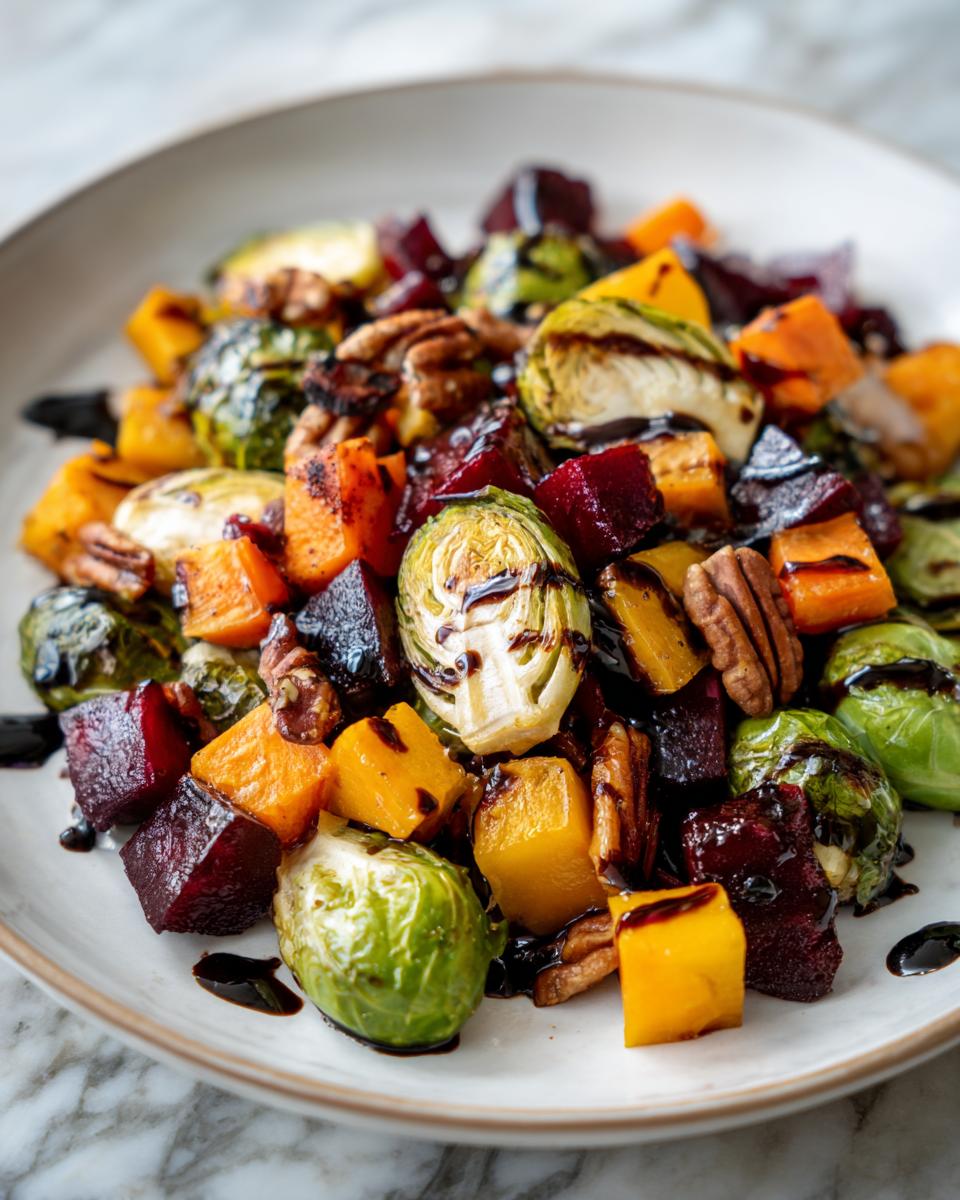
Ingredient Notes and Simple Swaps for This Winter Vegetable Salad
One of the best things about teaching beginners is showing them how flexible cooking can be. While I stand by the exact measurements for this Winter Vegetable Salad, sometimes you just don’t have what’s listed, and that’s totally fine! We can make smart swaps without ruining the whole dish.
Let’s talk about that balsamic glaze first. If you happen to have high-quality, aged balsamic vinegar sitting around—the thick, syrupy kind—you can skip the whole reduction step! Just whisk it with a little honey or brown sugar and use it straight. That’s a huge time saver! If you are looking for more easy dessert swaps, check out our recipe for ooey gooey brown butter chocolate chip cookies.
If you’re worried about the deep color of the regular balsamic vinegar staining your beautiful roasted vegetables, use white balsamic vinegar for the glaze instead. It gives you that amazing sweet and tart reduction but keeps the color bright, which is great if you want a really vibrant Winter Vegetable Salad.
If you don’t want to boil beets (I get it, it takes forever!), you can absolutely buy pre-cooked, vacuum-sealed beets from the produce section. Just grab those, dice them up, and skip that whole boiling step. The texture is usually perfect right out of the package.
Finally, if you are in a hurry and don’t want to make a full reduction sauce, you can ditch the glaze step entirely. Just whisk together 1/4 cup of balsamic vinegar with 2 tablespoons of olive oil until it looks creamy—that’s called emulsifying. Drizzle that lighter dressing over your Winter Vegetable Salad instead. It’s a lighter touch, but still delicious!
Storage and Reheating Instructions for Leftover Winter Vegetable Salad
Leftovers! That’s another win for the beginner cook, right? Having a fantastic Winter Vegetable Salad ready to go the next day saves so much time. The biggest challenge with this salad is keeping the textures right, especially since we have roasted vegetables, nuts, and a glaze.
My number one rule for leftovers is separation. If you mix everything together, especially with the beets in there, the moisture starts to break down the pecans and the roasted veggies can get soggy overnight. For the absolute best results next time you want this Winter Vegetable Salad, store the components separately. If you want more ideas on storing food safely, check out our guide on our about page for general kitchen tips.
The cooked vegetables (squash and sprouts) actually hold up really well together. The pecans and cranberries should stay in a sealed baggie or small container so they stay crunchy. And that gorgeous balsamic glaze? Keep it in a little jar in the fridge; it might thicken up, but it loosens right back up at room temperature.
Reheating is optional—this salad is great cold! But if you want warm veggies, just spread the roasted squash and sprouts on a sheet pan and pop them in a 300 F oven for about 8 minutes. Don’t microwave them unless you like rubbery sprouts! Add the cold beets, pecans, and cranberries back in right before you drizzle that glaze on top.
Here’s a quick guide for keeping your Winter Vegetable Salad components fresh:
| Component | Storage Method | Estimated Freshness |
|---|---|---|
| Roasted Veggies (Squash/Sprouts) | Airtight container in the fridge | Up to 4 days |
| Pecans & Cranberries | Sealed bag or jar at room temperature | 1 week+ |
| Cooked Beets (Diced) | Airtight container in the fridge | 3-4 days |
| Balsamic Glaze | Sealed jar in the fridge | Up to 2 weeks |
Frequently Asked Questions About This Winter Vegetable Salad
I always get questions when I post a recipe that relies on roasting, so here are the answers to the most common things I hear about making this Winter Vegetable Salad perfectly the first time.
Q1. Can I use pre-cooked beets instead of boiling them myself?
Oh, absolutely! Boiling beets takes forever, and honestly, I sometimes cheat too. If you find vacuum-sealed, pre-cooked beets in the produce section, they work perfectly. Just drain them, dice them up, and toss them in at the end. It cuts down your cook time significantly!
Q2. My Brussels sprouts aren’t charring; what am I doing wrong?
This is usually a crowding issue. If you pile the halved Brussels sprouts on top of each other, they steam, and steaming makes them mushy and green, not brown and flavorful. Make sure they are in a single layer, cut-side down, with a little space between each one. Give them that high heat and be patient!
Q3. Can I make this salad ahead of time for a party?
Yes, but remember my storage advice! You can roast all your vegetables and make the glaze a day ahead. Keep the pecans separate so they don’t get soft. Assemble the entire Winter Vegetable Salad—roasties, beets, cranberries, and pecans—but wait to drizzle the glaze until about 15 minutes before you serve it. That keeps everything crisp and fresh.
Q4. What can I use instead of pecans if I have a nut allergy?
No problem at all! If you skip the pecans, you lose that wonderful crunch, so we need to replace it. Roasted pumpkin seeds (pepitas) are my go-to substitute here. They toast up just as nicely and give you a similar textural element in your Winter Vegetable Salad. If you want to see more easy snack swaps, check out our snacks category.
Q5. Why do I have to add the beets last when assembling the salad?
This is purely for aesthetics! Beets contain a super powerful, beautiful red pigment. If you mix them in with the squash and sprouts too early, that color bleeds out and turns your entire gorgeous roasted vegetable mix a dull reddish-brown. Adding them last lets you fold them in just enough so you get some beet in every bite without ruining the visual appeal of the salad.
Sharing Your Winter Vegetable Salad Experience
I really hope you give this Winter Vegetable Salad a shot this week. When I first started NoobRecipes, I was terrified of roasting vegetables, but this recipe showed me that it’s just heat management, and you totally got this! If you make this recipe, please share it with us on social media!
I am so curious to see how yours turns out. Did the balsamic glaze get nice and thick for you? Did you manage to keep those pecans super crunchy? Tell me everything! You can follow our latest updates on Facebook.
If you managed to conquer the roasting and you end up loving how hearty and satisfying this salad is, please do me a huge favor and come back here to leave a rating. Five stars helps other beginners like me see that they don’t need to be afraid of wholesome, homemade meals. Drop a comment below and let me know if you made any fun little swaps—I always love learning new tricks from my readers. Happy cooking! For more visual inspiration, check out our Pinterest page.
Print
Simple 375 Winter Vegetable Salad joy
- Total Time: 1 hour 25 minutes
- Yield: 6 servings
- Diet: Vegetarian
Description
This Winter Vegetable Salad combines roasted Brussels sprouts, sweet butternut squash, earthy beets, crunchy pecans, and tart cranberries, all finished with a simple balsamic glaze. It is a hearty, colorful salad perfect for colder months.
Ingredients
- 3 cups Brussels sprouts (raw, ends trimmed, yellow leaves removed)
- 4 tablespoons olive oil (divided)
- Salt to taste (for roasting)
- 4 cups butternut squash (uncooked, peeled, seeded, and cubed into 1-inch cubes)
- 2 beets
- 2 cups pecan halves
- 1 cup dried cranberries
- 1 cup balsamic vinegar
- 1/4 cup honey or brown sugar
Instructions
- Preheat oven to 375 F. Line a baking sheet with parchment paper.
- Trim ends of Brussels sprouts and remove yellow leaves. Slice all Brussels sprouts in half.
- In a medium bowl, combine halved Brussels sprouts, 2 tablespoons of olive oil, and salt. Toss to combine.
- Place Brussels sprouts onto the baking sheet, cut side down. Roast at 375 F for 20-25 minutes, turning over during the last 5-10 minutes until tender and slightly charred.
- For the butternut squash, preheat oven to 375 F and line a separate baking sheet with parchment paper.
- In a medium bowl, combine cubed butternut squash, 2 tablespoons of olive oil, and salt. Toss to combine.
- Spread butternut squash in a single layer on the baking sheet. Bake for 20-25 minutes, turning once halfway through, until softened.
- To cook beets, place 2 beets in a saucepan filled with water. Bring to a boil. Boil on medium heat, half-covered, for 30-40 minutes until soft.
- Carefully remove beets, let them cool completely. Peel the cooled beets and dice them into small cubes.
- Preheat the oven to 350 F. Line a baking sheet with parchment paper. Spread pecans in a single layer.
- Toast pecans for 5 to 10 minutes until they darken slightly. Watch them closely as they burn fast.
- To make the balsamic glaze, combine balsamic vinegar and honey or brown sugar in a medium pan. Cook regularly stirring until the mixture reduces by about half and coats the back of a spoon.
- In a large bowl, gently toss together the roasted Brussels sprouts, roasted butternut squash, toasted pecans, and dried cranberries.
- Add the diced cooked beets last to prevent coloring the salad red.
- Drizzle the balsamic glaze over the salad just before serving. Do not mix it in.
Notes
- For a brighter salad color, make the glaze using white balsamic vinegar instead of regular balsamic vinegar.
- If you have high-quality aged balsamic vinegar, you can use it as is without cooking it down.
- Alternatively, whisk together 1/4 cup of balsamic vinegar and 2 tablespoons of olive oil until emulsified, and use this mixture as a lighter dressing.
- Prep Time: 30 minutes
- Cook Time: 55 minutes
- Category: Salad
- Method: Roasting and Boiling
- Cuisine: American