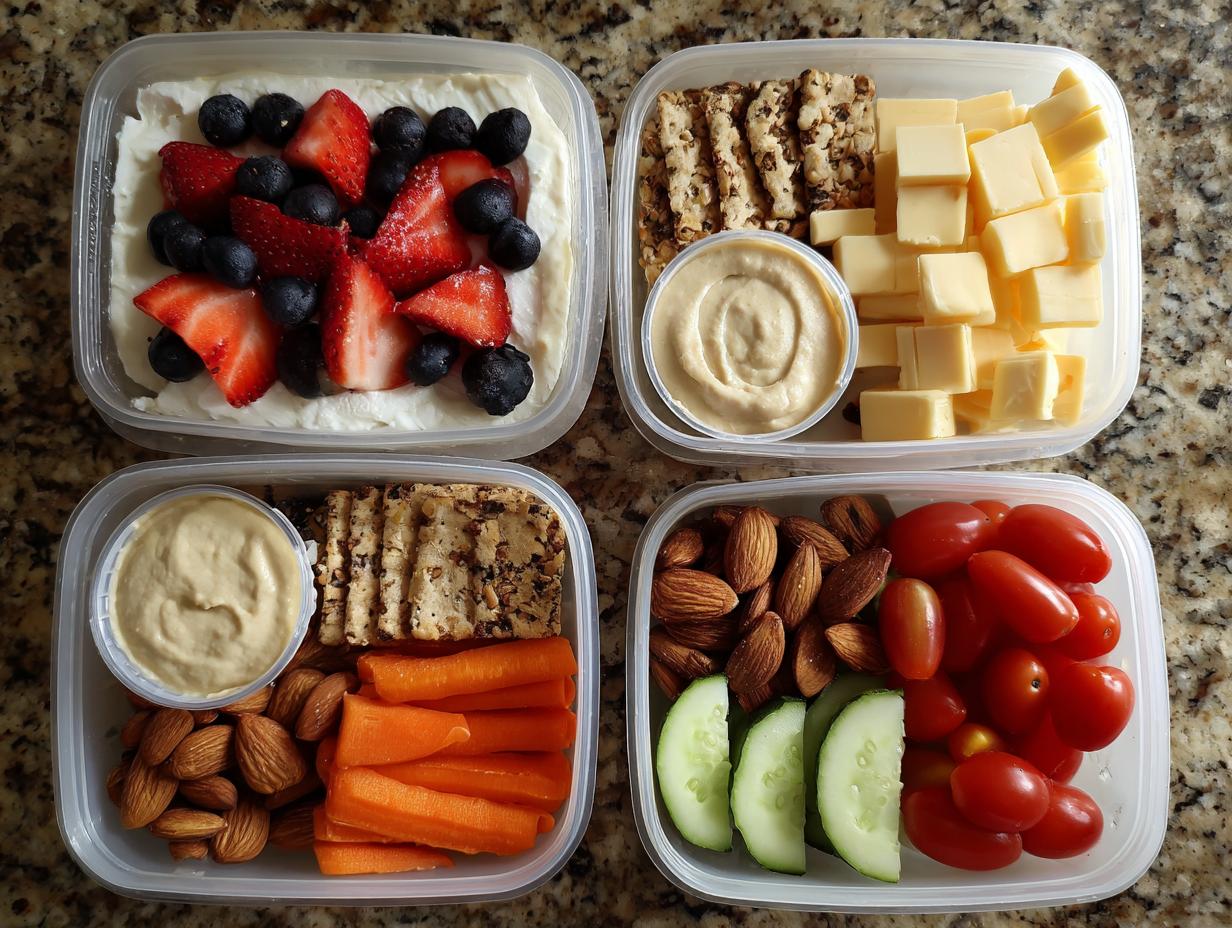
Oh my gosh, you have to try this system for work lunches! I swear, I used to hit that 3 PM slump every single day, reaching desperately for whatever sugary thing was hiding in my desk drawer. But since I started putting together these healthy snack boxes, my energy has been steady as a rock! Seriously, forget those sad little bags of chips. We’re talking about creating perfectly balanced, adult-friendly little packages that hit all the good notes: protein, fiber, and those wonderful, satisfying healthy fats.
I’ve spent way too much time perfecting this method—I mean, I’ve tested every combination of crunch and dip imaginable! The secret isn’t just the ingredients, though they matter, but getting the ratios *just* right so you don’t feel weighed down. My goal here, based on years of trial-and-error (and a few too many sad, soggy crackers), is to give you the blueprint for grab-and-go success. Trust me, once you see how simple the assembly is, these healthy snack boxes will revolutionize your midday routine!

Why You Will Assemble These Healthy Snack Boxes
I know you’re busy. Who isn’t? That’s why I’ve designed this system to be fast, efficient, and genuinely good for you. You don’t need complicated recipes when you’re just trying to pack lunch for the week. These boxes are about making smart choices easy, so you can focus on your actual day instead of stressing about food.
Once you try packing these, you’ll realize the payoff is huge. Here’s why these are going to become your new favorite meal prep hack:
Quick Assembly Time and Prep
Honestly, the longest part is washing the fruit! The total assembly time for all twelve boxes clocks in right around 20 minutes. That’s it! You spend twenty minutes on a Sunday, and you’ve got three days of perfect, ready-to-go fuel. No cooking, no warming up, just pure grab-and-go convenience when you’re rushing out the door.
Balanced Macronutrients for Adults
This recipe isn’t just filling; it’s smart fuel. We aren’t just throwing random things in a container. We are hitting protein for staying full, fiber from the veggies and fruit to keep things moving smoothly, and healthy fats from the nuts and hummus to stop that mid-afternoon energy crash. It’s the perfect trifecta for steady, non-jittery energy all day long.
Essential Components for Your Healthy Snack Boxes
Okay, now for the fun part: the actual food! Building these incredible healthy snack boxes hinges on having the right mix of components ready to go. I’ve learned the hard way that if you don’t measure things out precisely, you either run out of hummus too fast or end up with way too many crackers. Because these are assembly-only, the prep work is everything. We need to make sure we have our protein, our fresh stuff, and our crunch covered!
We are aiming for variety here, so make sure you have all your items ready before you start dividing them up. It makes the whole process flow so much smoother when everything is staged and waiting!
Produce Selection and Preparation
This is where the freshness comes in! Everything needs a good, thorough wash and dry—I mean *really* dry. Soggy veggies are the enemy of a good snack box. You need one cup each of cherry tomatoes, baby carrots, and cucumber slices. I like to use the English cucumbers because they have fewer seeds. For the fruit, slice up two large crisp apples right before assembly; they brown fast! Then you’ll need one cup of fresh strawberries (sliced) and one cup of blueberries for the berry boxes later on.
Protein and Dairy Sources
Since these are vegetarian protein snacks, we rely on dairy and legumes! For your protein punch, grab one cup of sharp cheddar cheese cut into nice little cubes—nothing too tiny, or they disappear. Then, for the second box type, you need a full cup of full-fat cottage cheese. I stick to full-fat because it feels more satisfying, but use what you love. This dairy is key to keeping you full until dinner time!
Fiber, Fat, and Crunch Elements
These are the supporting cast that makes the whole box taste amazing. You’ll need one cup of whole grain crackers—keep these separate for now! For healthy fats, measure out a half cup of roasted almonds and a half cup of dried apricots. Don’t skip the apricots; they offer a wonderful chewy texture contrast. Finally, we have the creamy hummus (one cup total) and the granola (one half cup total). Remember that granola rule—we’ll talk about keeping it crunchy in a bit!
Step-by-Step Assembly of Healthy Snack Boxes
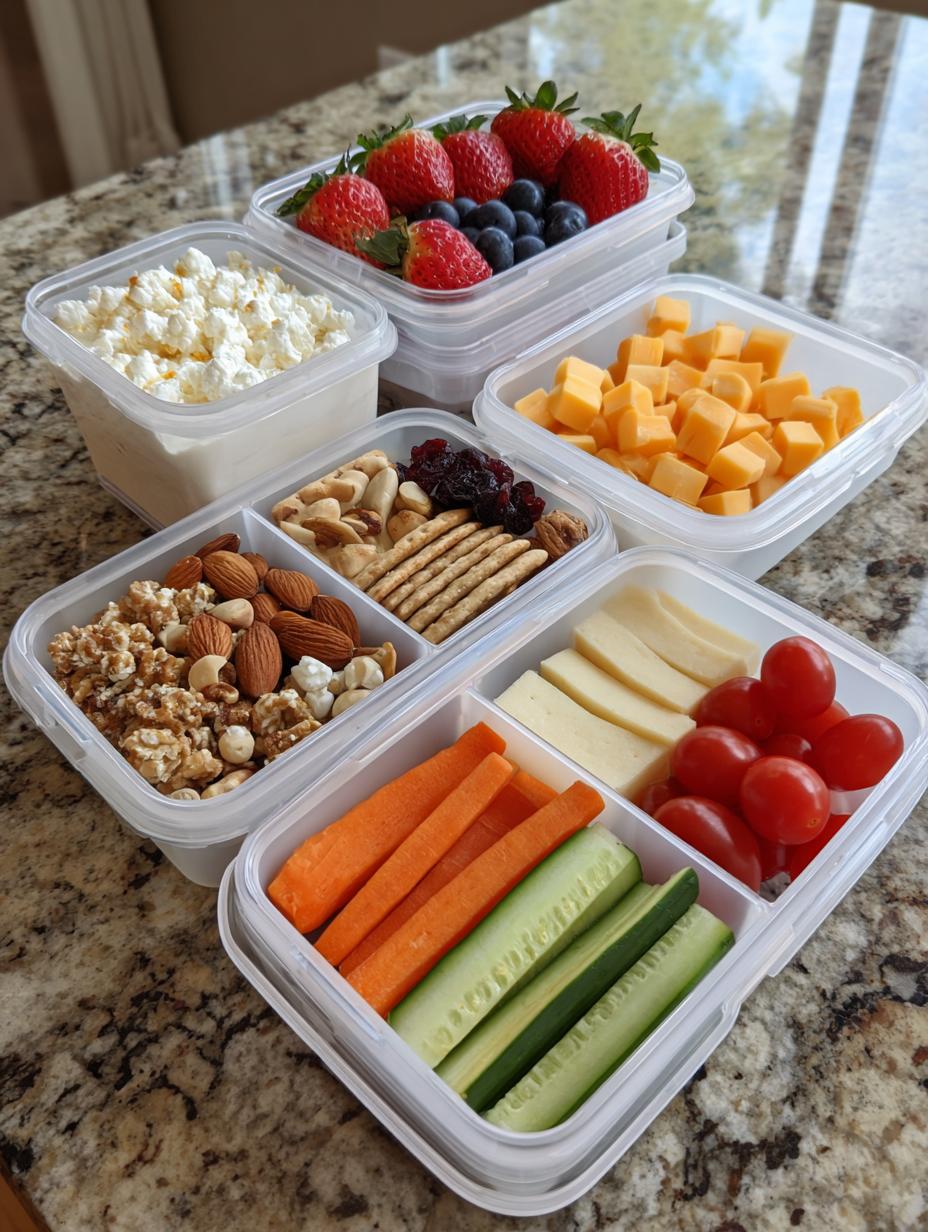
Alright, here’s where we turn all those beautiful ingredients into perfectly portioned fuel. We are making three distinct types of healthy snack boxes here, so grab your four small containers for Box One, four for Box Two, and four more for Box Three. If you have four people you are packing for, you’ll repeat these steps four times. My advice? Do all the veggies first, then all the cheese, and so on. It’s faster that way!
Remember, the goal is to make grabbing one of these on a busy morning feel like hitting the jackpot. We are aiming for balanced portions that keep you satisfied, not stuffed!
Preparing the Vegetable and Dip Boxes
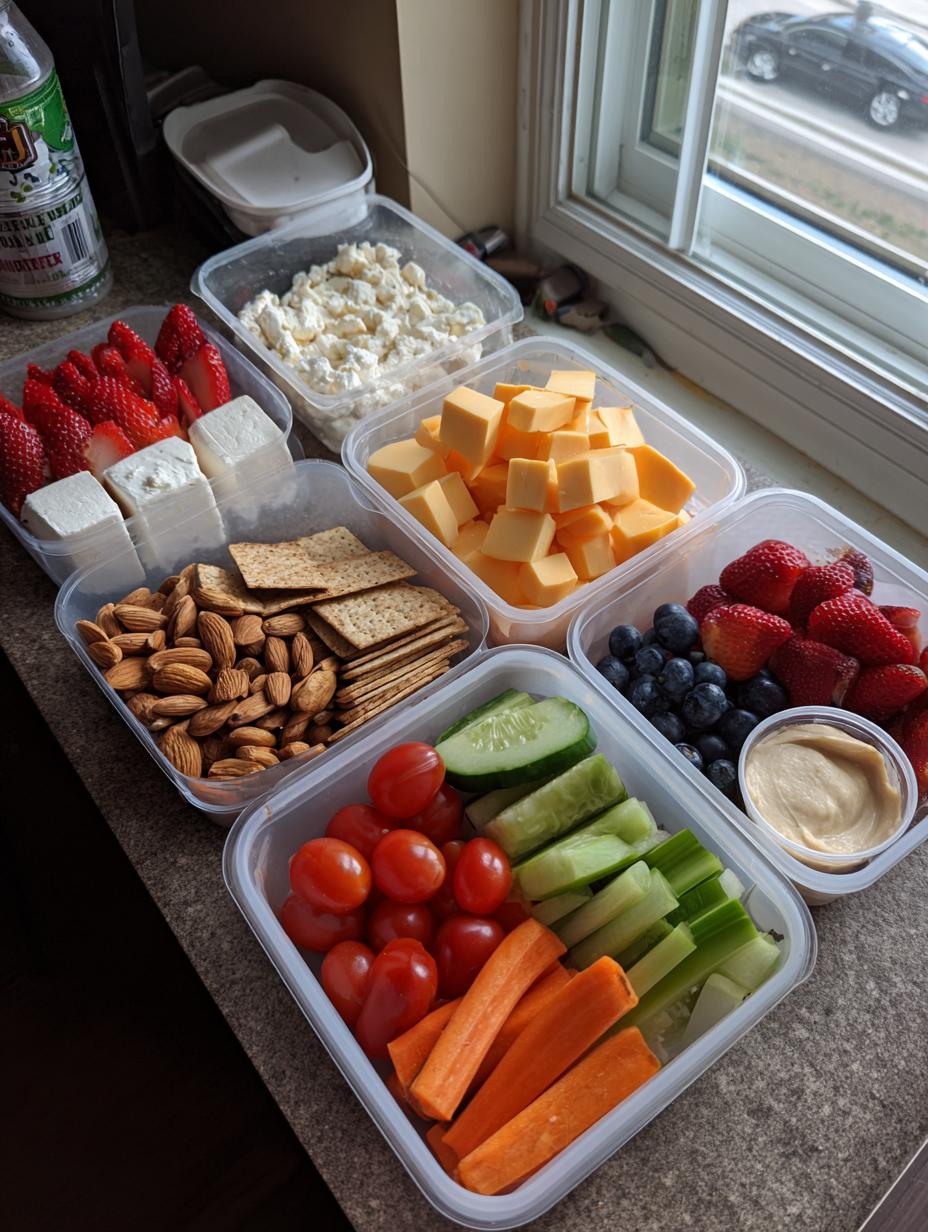
For Box One, we are loading up on hydration and fiber. Take your washed and dried cherry tomatoes, carrots, and cucumber slices. You need to divide these evenly among the four containers. Don’t just dump them—try to get a nice mix in each one so every box looks appealing. Next, grab your hummus. You need four small, lidded cups for this part. Portion the hummus evenly into those little cups and seal them tight before nestling one into each vegetable container.
Now, the crackers! This is important for texture. Take your whole grain crackers and divide them up among the four containers. If your containers have a separate little compartment, use it! If not, try to place them against the side, away from the hummus, or even pack them separately in a small zip-top baggie tucked inside the main container. We want zero sogginess here!
Assembling the Cheese and Fruit Boxes
Time for Box Two, which is my favorite for savory cravings. Into four new containers, start by adding the sharp cheddar cheese cubes. Make sure they are cubed nicely so they are easy to pick up. Alongside those, immediately add your sliced crisp apples. The apple slices pair perfectly with the sharp cheese, trust me. Now, let’s add the healthy fats and chewiness: divide the roasted almonds and the dried apricots evenly between these four containers. This box is pure, satisfying energy!
Constructing the Cottage Cheese and Berry Boxes
Box Three is our creamy, sweet powerhouse. Spoon that full fat cottage cheese evenly into the last set of four containers. This is the base. Now, take your sliced strawberries and blueberries and top the cottage cheese. I like to make a little colorful mound right on top—it looks so much nicer than mixing it all up beforehand. Here’s the crucial timing step for this box: You must add the granola just before sealing the containers, or pack it separately if you are prepping more than a day ahead. If you add it now, it will still be crunchy for the next day’s snack, but if you’re eating it tomorrow, sealing it now is fine!
Expert Tips for Perfect Healthy Snack Boxes
Listen, assembling these boxes is easy, but keeping them tasting like you *just* made them takes a little know-how. I’ve learned a few tricks over the years to make sure the crackers don’t get rubbery and the fruit stays fresh. These practical tips are what separates a good snack prep from a great one. We want maximum freshness, always!
Maintaining Texture Integrity
The absolute number one enemy of a great snack box is moisture migration. For your crackers and granola—the crunchy elements—you have two choices. If you’re eating the boxes within 24 hours, you can place them in the container, making sure they don’t touch any wet items like the hummus or cottage cheese. If you are prepping for three days, you have to pack the granola and crackers separately in a tiny zip-top baggie and tuck that bag into the main box. That way, the humidity from the fruit and veggies can’t sneak over and ruin the crunch. It’s an extra minute, but so worth it!
Food Safety and Temperature Control
Since we are relying heavily on dairy here—the cheddar, the cottage cheese, and the hummus—temperature control isn’t optional, it’s mandatory for safety. You must keep these boxes refrigerated at or below 40 degrees Fahrenheit. If you are packing these for a workday, make sure you transfer them directly from your fridge to an insulated lunch bag with a good ice pack. Don’t let them sit on the counter while you pack your purse or keys. These perishable items need to stay chilled until you are ready to eat them!
Frequently Asked Questions About Healthy Snack Boxes
I get so many questions about customizing these snack boxes, which is great because they are so flexible! People always want to know how to stretch the prep or swap out items based on what they have. Here are the things I hear most often when folks are trying to nail their weekly meal prep routine.
Can I Make These Healthy Snack Boxes Ahead of Time
Yes, absolutely! That’s the whole point, right? I usually prep mine on Sunday evening, and they hold up beautifully for three days in the fridge, provided you follow the temperature rules we just talked about. For maximum freshness, especially for the crackers, I always suggest prepping the *components* on Sunday, but assembling the boxes on Monday morning for the first two days. For days three and four, pack the crunchier items separately. They are designed to last, but three days is my hard limit for safety.
What Are Good Protein Snacks to Substitute
If you aren’t feeling the cottage cheese or cheddar, there are tons of great vegetarian protein snacks you can swap in! Instead of the cheese cubes, try a hard-boiled egg (if you aren’t strictly vegetarian, otherwise skip this!). You could also use edamame pods, a small portion of roasted chickpeas, or even some high-protein yogurt instead of the cottage cheese base. Just make sure whatever you use is portioned similarly so your box stays balanced and satisfying!
How Do I Adjust Serving Sizes for More Boxes
Scaling this recipe is super easy because we are mostly measuring by the cup! If you need to make, say, 24 boxes instead of 12, you just double everything. If you need 8 boxes, you cut everything in half. The only tricky part is the apple slices—since they brown, just slice enough apples for the boxes you plan to eat in the first two days. For the cottage cheese, you’ll need two full cups for eight boxes, and so on. It’s a simple multiplication game!
Storing and Managing Your Healthy Snack Boxes
Once you’ve put all that work into assembling perfect healthy snack boxes, you want to make sure they last and taste great when you finally reach for them. The good news is that since this recipe involves zero cooking, there’s no reheating needed! You just grab it and go. But storage is everything, especially with those dairy components we included for protein.
The key here is keeping things cold and dry. I always aim to eat mine straight from the fridge—that’s when the cheese is firm and the veggies are crisp. Don’t leave them sitting out on your desk waiting for lunch; grab them when you need them, and enjoy! Here’s a quick reference guide for how long you can safely keep these prepped snacks.
Storage Guidelines and Shelf Life
We need to respect the dairy and the fresh produce. I’ve tested this extensively, and while the dry components could last forever, the cottage cheese and fresh apples have a shorter window for peak quality.
| Component | Recommended Shelf Life |
|---|---|
| Vegetables/Fruit | Up to 4 days (best by 3) |
| Dairy (Cottage Cheese/Cheddar) | 3 days maximum |
| Hummus/Dips | Up to 5 days (if tightly sealed) |
| Crackers/Granola | Up to 4 days (if kept dry) |
Estimated Nutritional Breakdown for Your Healthy Snack Boxes
I’ve run the numbers on one of these beautiful, balanced snack boxes, and I’m happy to report they are fantastic fuel without being heavy! Remember, since we are assembling different combinations (some with cottage cheese, some with hummus), this breakdown is an *estimate* based on an average distribution of all 12 boxes combined. It gives you a great baseline for what you’re putting into your body when you reach for one of these!
It’s important to know what you’re eating, especially when you’re trying to maintain steady energy throughout a long workday. Here’s what you can generally expect from one serving.
Understanding the Serving Size
One serving is simply one complete snack box—either the veggie box, the cheese box, or the cottage cheese box. Because the ingredients are divided evenly across the yield of 12 boxes, the nutritional profile is fairly consistent across the three types. If you swap out the cottage cheese for extra nuts, for instance, the fat and protein numbers will shift slightly, but this table gives you a solid starting point for planning your daily intake.
| Nutrient | Amount (Per Box Estimate) |
|---|---|
| Serving Size | 1 Box |
| Calories | 320 |
| Protein | 16 g |
| Fat | 14 g |
| Carbohydrates | 34 g |
If you want to see more of our quick meal ideas, check out our page on snacks, or follow us on Pinterest for visual inspiration!
Print
Amazing 12 Healthy snack boxes you need
- Total Time: 20 minutes
- Yield: 12 snack boxes
- Diet: Vegetarian
Description
Create easy, balanced healthy snack boxes for adults featuring protein, fiber, and healthy fats. These boxes support steady energy for workdays or general snacking.
Ingredients
- 1 cup cherry tomatoes
- 1 cup baby carrots
- 1 cup cucumber slices
- 1 cup hummus
- 1 cup whole grain crackers
- 1 cup sharp cheddar cheese cubes
- 2 large crisp apples sliced
- 1 half cup roasted almonds
- 1 half cup dried apricots
- 2 cups full fat cottage cheese
- 1 cup fresh strawberries sliced
- 1 cup blueberries
- 1 half cup granola
Instructions
- Wash and dry all fruits and vegetables completely.
- Divide cherry tomatoes, carrots, and cucumber evenly among four small containers for Box One.
- Portion hummus into four small lidded cups and place one cup in each container.
- Add whole grain crackers to the containers, separate them if you can to maintain crispness.
- In four new containers for Box Two, add cheddar cheese cubes and apple slices.
- Divide almonds and dried apricots evenly into those same containers.
- In four additional containers for Box Three, spoon cottage cheese evenly.
- Top the cottage cheese with strawberries and blueberries.
- Add granola just before sealing, or pack it separately to keep it crunchy.
- Seal all containers and refrigerate them until you are ready to eat.
Notes
- Keep dairy products refrigerated at or below 40°F.
- Consume boxes within three days for food safety.
- Prep Time: 20 minutes
- Cook Time: 0 minutes
- Category: Snack
- Method: Assembly
- Cuisine: American